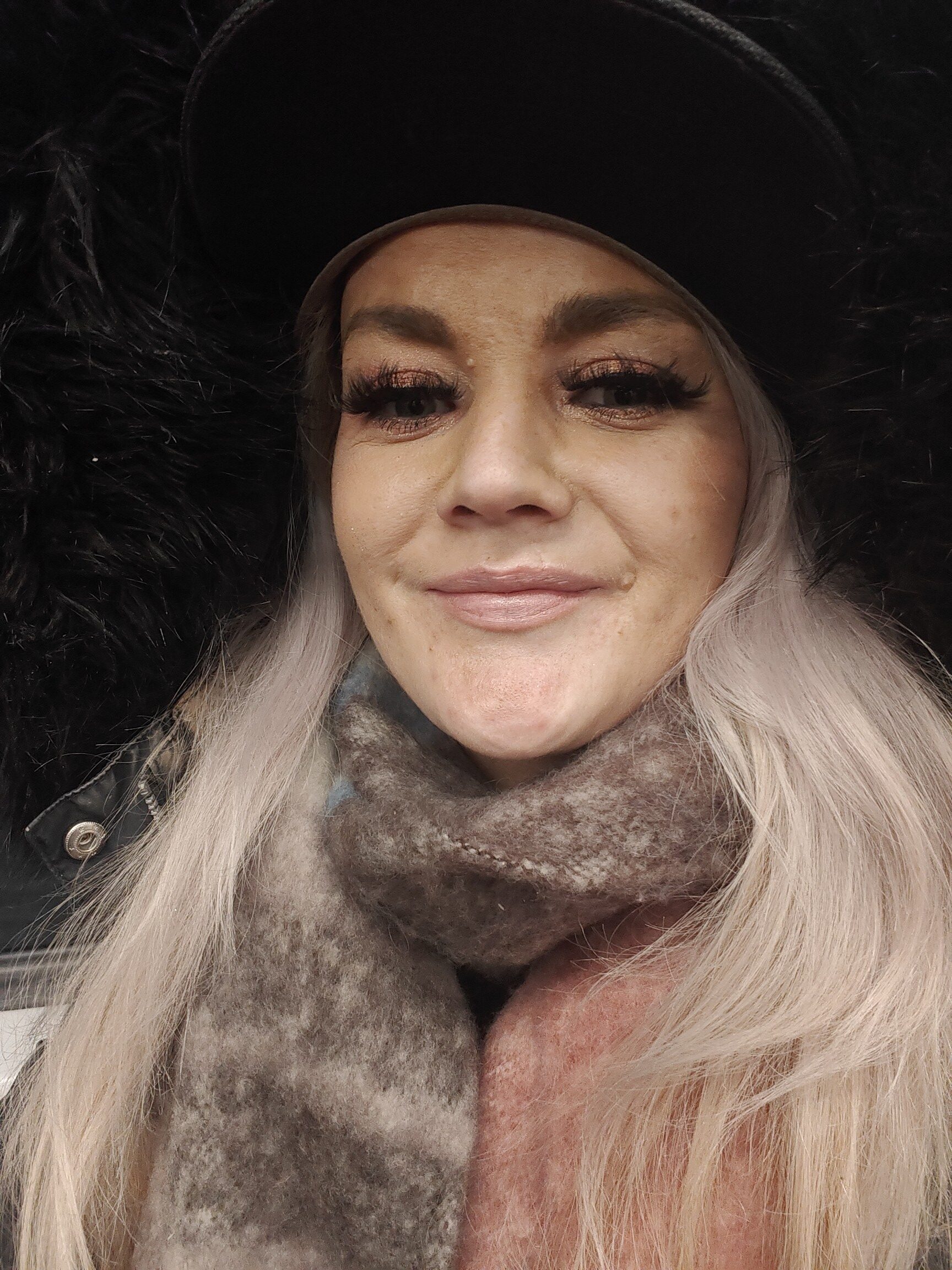
Sarah Eilen Slettvoll: time-critical rehabilitation after the Oslo subway incident
Sarah Eilen Slettvoll was severely injured after the subway incident at Jernbanetorget in Oslo on 24 November 2025. More than five months later, she remains in a severe, non-communicative condition. The urgent question now is whether controlled contact with the support person she herself chose may help trigger response, communication or rehabilitation.
Status as of May 2026
- Person: Sarah Eilen Slettvoll, born 09.02.1995.
- Incident: Struck by the subway at Jernbanetorget in Oslo on 24.11.2025.
- Current situation: Severely injured, non-communicative / catatonic or almost unable to express her own will.
- Time factor: More than five months have passed since the incident. A possible rehabilitation window may be closing.
- Documented role: Sarah signed several powers of attorney to Per Øyvind Notsure Norli Karlsen from 25.10.2024 to 23.11.2025.
- Urgent question: Whether controlled contact with her chosen support person may help trigger response, communication or rehabilitation.
Documented in the case
- The subway incident on 24.11.2025 was reported by several Norwegian media outlets, including Aftenposten, NRK, TV 2, VG, Dagbladet, Vårt Oslo, Nettavisen/Avisa Oslo and Document.no.
- Several signed powers of attorney exist from the period 25.10.2024 to 23.11.2025.
- The Norwegian Parliamentary Ombud reviewed in 2025 issues concerning a complaint about restrictions on Sarah’s contact with the outside world during involuntary psychiatric care.
- The restraining order has been handled by Oslo District Court and Borgarting Court of Appeal.
- There are registered police reports and case numbers concerning the hospital, the police and the Norwegian Bureau for the Investigation of Police Affairs.
- There is video documentation from the incident and the subsequent handling at Jernbanetorget.
- There is a photo and a video clip from 24.11.2025, a few hours before the incident, where Sarah says: “I can’t focus”.
- There is a central timeline issue in that the hospital was reported to the police on 09.12.2025 at 03:18, while Oslo University Hospital later the same day at 15:10 sent a communication to the police that was later used as part of the basis for the restraining order case.
Urgent question
Why has it not immediately been attempted, or at least independently assessed, whether controlled contact with Sarah’s chosen support person may help trigger response, communication or rehabilitation?
This website has been created to gather documentation, timeline and central questions in the case. Its purpose is not to replace independent investigation, but to make the documentation publicly available so that journalists, lawyers, healthcare professionals, supervisory authorities and the public can review the case.
This case should not primarily be understood as a dispute about visitation. It should be understood as a time-critical medical, legal and ethical situation.
Sarah is severely injured after the incident on 24 November 2025. She is described as non-communicative / catatonic or almost unable to express her own will. At the same time, she is cut off from contact with a person to whom she repeatedly gave powers of attorney before the incident.
There is therefore a concrete and time-critical question whether controlled contact with a familiar safe person may be relevant as rehabilitative and communicative stimulation.
Key documents
- Power of attorney dated 23.11.2025, the day before the subway incident
- Letter from the Norwegian Parliamentary Ombud, 18.06.2025
- Oslo District Court ruling in the restraining order case
- Document collection from Borgarting Court of Appeal
- TV 2’s report that life-saving treatment was given after the person was brought up from the track
- Document.no, updated article referring to signs of life at 16:03
- Video clip from 24.11.2025 where Sarah says: “I can’t focus”
- Correspondence with Oslo University Hospital concerning powers of attorney and patient status
- Confirmation of reported matter to the Norwegian Bureau for the Investigation of Police Affairs
Short timeline
This timeline provides an overview. Full documentation and sources follow below.
- 25.10.2024–23.11.2025: Sarah signs repeated powers of attorney documenting her wish for assistance, representation and support.
- 05.11.2024: An urgent concern report is sent to the County Governor concerning Sarah’s health, HIV treatment, nutrition, possible electrolyte imbalance and need for comprehensive assessment.
- 12.05.2025: Lovisenberg Diaconal Hospital issues decisions restricting contact with the outside world and imposing involuntary medication.
- 18.06.2025: The Norwegian Parliamentary Ombud asks the Supervisory Commission for Lovisenberg to process the complaint concerning restricted contact.
- 07.07.2025: The time limit for the involuntary medication decision expires according to the case documentation. It must be investigated whether medication effects or treatment regime continued after this.
- 23.11.2025: Sarah signs a new power of attorney the day before the subway incident.
- 24.11.2025 around 12:08: A photo and short video of Sarah are taken. In the video she says: “I can’t focus”.
- 24.11.2025 at 15:28: The police incident time for the subway incident at Jernbanetorget.
- 24.11.2025 after 16:00: Sarah is brought up from the track area.
- 24.11.2025 at 16:03: Document.no later refers to video documentation showing observed signs of life on the stretcher.
- 27.11.2025: Documentation is sent to Oslo University Hospital concerning powers of attorney, representation and nearest-relative status.
- 05.12.2025: Oslo University Hospital states that it relates to the guardian and persons registered as relatives in its patient record system.
- 09.12.2025 at 03:18: The hospital is reported to the police for matters concerning gross breach of official duty and unlawful obstruction of power of attorney in a critical patient situation.
- 09.12.2025 at 15:10: Oslo University Hospital’s lawyer sends an email/letter to the police. This communication is later used as part of the basis for the police case on 23.12.2025, but appears in the evidence list to be incorrectly dated 23.12.2025.
- 23.12.2025: The police open a case/report against me and impose a restraining order until 23.12.2026, where Oslo University Hospital’s communication forms part of the basis.
- 28.01.2026: Oslo District Court upholds the restraining order.
- 30.03.2026: Borgarting Court of Appeal dismisses the appeal and upholds the restraining order.
Current situation and rehabilitation window
The subway incident occurred on 24 November 2025. As of May 2026, more than five months have passed.
In cases of severe brain injury, time is not just a matter of calendar days. Time concerns rehabilitation potential, stimulation, response, neurological plasticity, mobilisation and communication. The longer a patient remains without targeted and individually adapted stimulation, the greater the risk that possible functions will not be regained.
Sarah is described as catatonic, non-communicative or almost unable to express her own will. She therefore cannot explain what she wants, whom she wants near her, what she remembers, what she responds to, or what support may help her.
In such a situation, it is not enough to refer to calm, shielding or formal restrictions. The question must be what may actually help the patient.
Before the incident, Sarah had a long-standing relationship with me, Per Øyvind Notsure Norli Karlsen. She repeatedly gave me powers of attorney over time, including powers of attorney dated 21 November and 23 November 2025, just days and one day before the incident.
It is therefore not merely personally relevant that she be allowed to hear a familiar voice, sense a familiar presence, recognise smell, words, rhythm, memories or safety. It may be medically and rehabilitatively relevant.
It is not possible to guarantee that such contact will produce a response. But precisely because the possibility cannot be excluded, it must be properly assessed.
What should happen immediately
An independent medical and rehabilitation assessment should urgently be carried out to determine whether Sarah may benefit from controlled contact with her chosen support person.
This can be done safely:
- with healthcare personnel present
- as a time-limited visit
- with a clear purpose: observation of response
- with neurological or rehabilitation assessment before and after
- with gradual testing of voice, smell, familiar words, memories and presence
- with audio or video recording if considered necessary
- without this implying free or uncontrolled contact
The point is not to bypass safety. The point is to try what may be medically relevant while it can still matter.
If Sarah can still be reached, she must be reached now.
The powers of attorney and Sarah’s documented will
A decisive point in this case is that my role as support person, representative and nearest relative is not based on post hoc claims. It is based on repeated powers of attorney signed by Sarah over time.
These powers of attorney show continuity. This was not a single declaration in an unclear moment. There are documented powers of attorney from October 2024 to November 2025.
Signed powers of attorney
- 25.10.2024:
Power of attorney signed 25.10.2024 - 30.11.2024:
Power of attorney dated 30.11.2024 - 05.05.2025:
Power of attorney dated 05.05.2025 - 06.09.2025:
Power of attorney dated 06.09.2025 - 21.11.2025:
Power of attorney dated 21.11.2025 - 23.11.2025, the day before the subway incident:
Power of attorney dated 23.11.2025
The power of attorney dated 23 November 2025 is particularly important. It was signed the day before the incident at Jernbanetorget. If Sarah documented the day before the incident whom she wanted as support person and representative, later authorities cannot treat her will as unknown or irrelevant without a heavy and documented justification.
This is the core rights issue: Sarah’s last documented will before she was severely injured must be taken seriously.
The Parliamentary Ombud and previous contact restrictions
The issue of contact, power of attorney and complaint rights did not arise only after the subway incident.
The Norwegian Parliamentary Ombud had already in June 2025 handled a case concerning a complaint about restrictions on contact with the outside world during involuntary psychiatric care.
The Ombud’s letter dated 18.06.2025:
The Norwegian Parliamentary Ombud: case concerning complaint over restrictions on contact with the outside world during involuntary psychiatric care
The Ombud asked the Supervisory Commission for Lovisenberg to process the complaint over the decision of 12 May 2025, either by considering it on the merits or by issuing a reasoned dismissal. If the Supervisory Commission believed there was no right of complaint, this had to be formalised.
This shows that contact restrictions, complaint rights and representation were already a rule-of-law issue before the incident. When the same pattern later repeats after a life-threatening injury, the seriousness increases significantly.
The subway incident on 24 November 2025
On 24 November 2025, Sarah was struck by the subway at Jernbanetorget.
The police incident time was 15:28. The time 15:38 was when the police notified the media, not the actual start time of the incident. This distinction is crucial.
Several media outlets reported the incident the same day, mainly without naming Sarah. The coverage described, among other things, a full stop in subway traffic, serious injuries and members of the public filming.
Aftenposten on the incident, 24.11.2025
Vårt Oslo on the incident, 24.11.2025
Dagbladet on the incident, 24.11.2025
VG on the incident, 24.11.2025
TV 2 live report, 24.11.2025
The question of 35 minutes before life-saving treatment
One of the most serious points in the case concerns the timeline for life-saving treatment.
The police incident time was 15:28. This must be distinguished from 15:38, when the police notified the media. Document.no later updated its article and referred to video documentation where, according to the article, signs of life were observed on the stretcher at 16:03.
Document.no, published 24.11.2025 and updated 25.04.2026
If the police incident time of 15:28 is used, this means a time span of 35 minutes until observed signs of life at 16:03.
TV 2 quotes police operations leader Kristine Hedly as stating that the person had suffered serious injuries and “received life-saving treatment after being brought up from the track”.
“Operations leader Kristine Hedly tells TV 2 that the person is said to have suffered serious injuries, and received life-saving treatment after being brought up from the track. The person has been taken to hospital by ambulance, with unclear injury severity.”
TV 2: Person struck by subway at Jernbanetorget in Oslo
This is a serious statement. When TV 2 quotes the police operations leader as saying that life-saving treatment was given after the person was brought up from the track, this must be compared with the available video documentation indicating that Sarah was first brought up after 16:00, and Document.no’s reference to observed signs of life at 16:03.
This raises the question whether life-saving treatment in fact first began after Sarah had been brought up from the track, more than half an hour after the incident at 15:28.
Was Sarah lying in the track area for more than half an hour after being struck, with severe neck injuries and poor respiration, without life-saving treatment actually being initiated before she was brought up?
This question is crucial because Sarah was later described as having three fractures in her neck, a minor brain haemorrhage, MRI-verified brain injury, liver injury and a critical somatic condition. Even a minor brain haemorrhage is relevant in this context, because the timeline for respiration, oxygenation, immobilisation, circulation and actual life-saving treatment may affect overall injury severity, secondary injury, prognosis and later rehabilitation possibilities.
If Sarah was during this period misjudged as lifeless, dead, without realistic survival prospects or given lower priority than her actual condition required, it must be investigated whether this misjudgement may have contributed to worsened injury severity or reduced rehabilitation potential.
It must therefore be investigated:
- when Sarah was first assessed as alive
- when respiration, pulse and level of consciousness were actually checked
- whether she received life-saving treatment while still in the track area
- whether life-saving treatment only started after she was brought up
- whether the neck injuries affected the ability to provide help in the track area
- whether any assumption of death, lifelessness or intentional action affected prioritisation
- whether misjudgement of condition, delayed life-saving treatment or insufficient respiratory/circulatory follow-up may have contributed to worsened brain injury, secondary injury or other injury severity
This must also be assessed in light of my role as nearest relative, representative, support person and witness to the course of events. If I was both present, had relevant observations of the incident and had a documented role as Sarah’s chosen support person, the later exclusion from Sarah and from information about her condition becomes even more serious.
The question is not simply whether the emergency services did their best in a difficult situation. The question is whether the first critical minutes were based on a correct factual understanding of Sarah’s condition, and whether later police, hospital and court handling has shielded this timeline from real scrutiny.
Video documentation from 24 November 2025
The videos are published because they illuminate timeline, course of events, public behaviour and the question of signs of life.
Video 1: Early phase outside Jernbanetorget station, around 15:30–15:33
Video 2: Footage from inside the platform area shortly after the incident
Video 3: Footage from outside, shortly before the stretcher comes up, around 16:10–16:20
The videos must be assessed as documentation, not sensational material. They are relevant because they may illuminate whether the police’s original understanding of the incident was correct, whether eyewitnesses described a fall rather than a jump, and whether the timeline for signs of life and medical handling is accurately presented.
Lovisenberg, involuntary medication and possible acute dystonia
Already in November 2024, a concern report was sent to the County Governor regarding Sarah’s health. The concern involved, among other things, HIV, possible failure in medical follow-up, nutrition, fluid intake, possible electrolyte imbalance, psychiatric deterioration and the need for comprehensive medical and psychiatric assessment.
The core issue in this part of the case is that Sarah’s symptoms over time may have been understood too narrowly as primarily psychiatric, especially linked to the diagnosis paranoid schizophrenia. It must be investigated whether somatic, neurological, trauma-related and neurodivergent explanations were sufficiently assessed.
This particularly concerns:
- nutrition and fluid intake
- possible electrolyte imbalance
- HIV treatment and somatic vulnerability
- ADHD-related issues
- possible autism / Asperger profile
- trauma burden / C-PTSD
- possible side effects of antipsychotic medication
The involuntary medication decision of 12 May 2025
On 12 May 2025, Lovisenberg Diaconal Hospital issued a decision on involuntary treatment with medication under the Norwegian Mental Health Care Act §§ 4-4 and 4-4 a.
The complaint against involuntary medication was not examined on the merits by the County Governor. It was dismissed on the grounds that I allegedly had no right of complaint, including because Lovisenberg had stated that I was not registered as nearest relative, and because the power of attorney dated 5 May 2025 was not accepted as a basis.
As a result, a central question was never actually examined:
Was the involuntary medication medically sound, legally valid and properly assessed against Sarah’s actual health condition?
This is particularly serious because warnings already existed about somatic and neurologically relevant factors. If such factors were not sufficiently assessed, antipsychotic involuntary treatment may have been used as a substitute for the comprehensive assessment Sarah needed.
According to the case documentation, the decision was time-limited until 7 July 2025. It must therefore be investigated whether medication, depot effects or treatment regime continued to affect Sarah after this date, and if so whether there was sufficient legal and medical basis.
Photo and video from the day of the incident: possible acute dystonia and pronounced focus difficulties
A photo and a short video clip taken on 24 November 2025, a few hours before the subway incident, show symptoms that in my assessment must be considered in relation to possible acute dystonia, medication effects, neurological/somatic condition and lack of comprehensive medical follow-up.
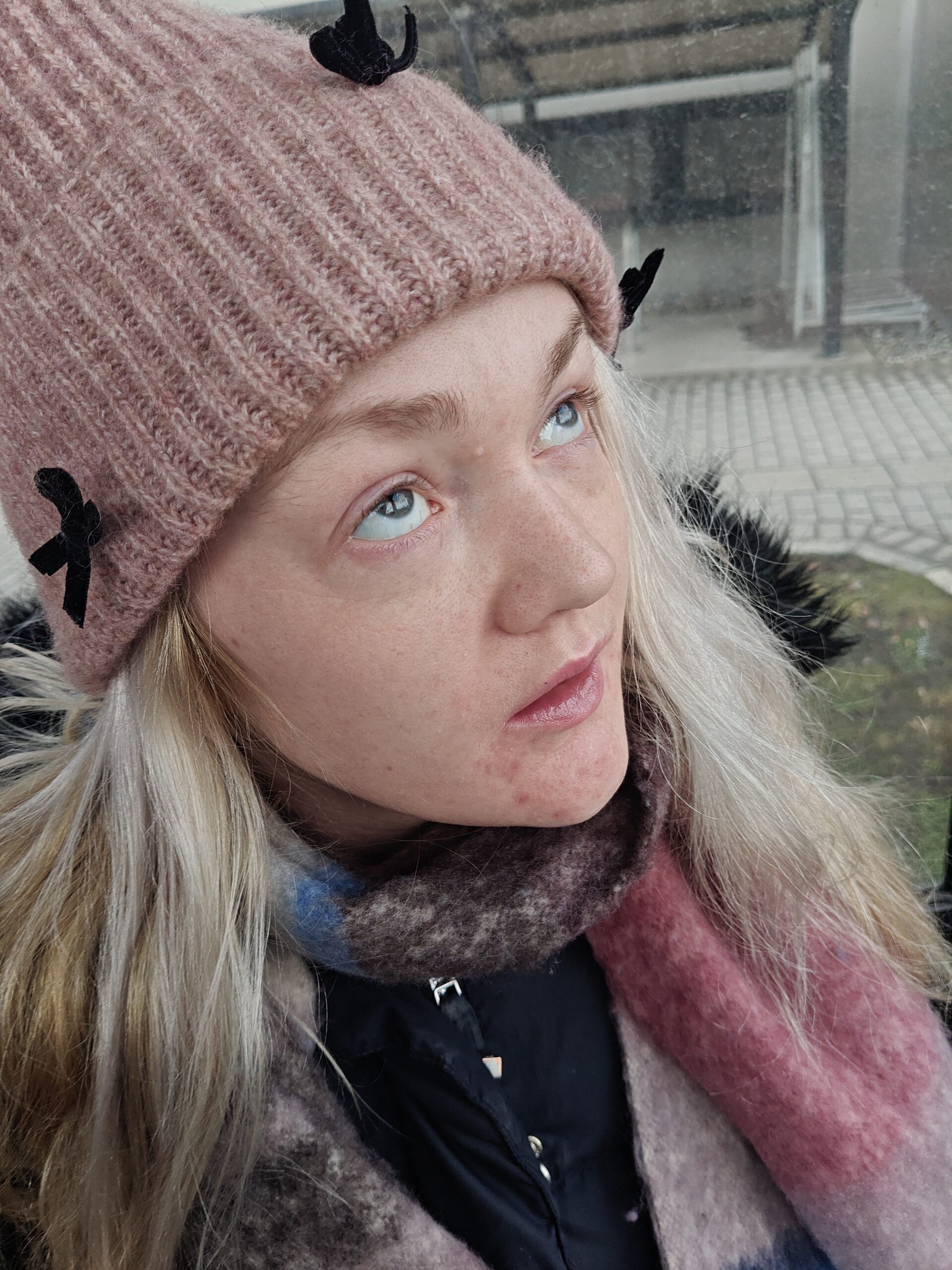
Photo taken on 24 November 2025, a few hours before the subway incident. In my assessment, the photo shows symptoms that should be considered in relation to possible acute dystonia and medical/neurological effects.
Video clip taken the same day and in the same timeframe. In the clip, Sarah clearly says: “I can’t focus”.
The video is particularly relevant because Sarah herself, a few hours before the subway incident, states that she cannot focus. This is a concrete and time-proximate observation of functional impairment, not merely a later interpretation.
Pronounced focus difficulties at this time must be assessed in context with her overall health situation, previous involuntary medication, possible medication effects, possible acute dystonia, nutrition/fluid problems, possible electrolyte imbalance, neurological/somatic vulnerability and the later incident the same day.
The point is not to make a final diagnosis based on one photo or a three-second video clip. The point is that the material shows concrete, time-proximate signs that should have triggered medical assessment. When Sarah herself says she cannot focus, a few hours before she is later struck by the subway, this is plainly relevant to assessment of function, orientation, acute health condition and possible contributing causes to the incident.
The question must therefore be:
Did involuntary medication, possible medication side effects, acute dystonia, somatic failure, lack of assessment or exclusion of her support person contribute to functional impairment, distress, disorientation or medical deterioration before the incident?
Oslo University Hospital, the police and the restraining order
After the incident, documentation was sent to Oslo University Hospital concerning powers of attorney, representation rights and nearest-relative status.
Oslo University Hospital later stated that it related to the County Governor, appointed guardian and persons registered as relatives in the hospital’s patient record system. This meant that Sarah’s own powers of attorney and last documented will did not have the practical effect they, in my view, should have had.
On 9 December 2025 at 03:18, the hospital was reported to the police for matters that, in my view, concern gross breach of official duty and unlawful obstruction of power of attorney in a critical patient situation.
Case number for the police report against the hospital: 17105609 / 14770/26-201
Time of police report: 09.12.2025 at 03:18
Criminal case created: 03.03.2026
Later the same day, on 9 December 2025 at 15:10, Oslo University Hospital’s lawyer sent an email/letter to the police. This communication from the hospital was later used as part of the basis for the police case on 23 December 2025, including the report against me and the restraining order concerning Sarah.
This timing is highly important: the hospital’s communication to the police came after the hospital had already been reported to the police earlier that night. If the hospital’s letter to the police was later used as a premise for the restraining order, it must be investigated whether the police and the court assessed that the hospital was not a neutral source of information, but itself a party in a reported matter.
An additional serious point is that Oslo University Hospital’s communication appears in the police evidence list to be incorrectly dated 23.12.2025, despite the documentation showing that it is from 09.12.2025 at 15:10.
This raises questions about the evidence presentation and timeline in the restraining order case. If a document from Oslo University Hospital was actually sent on 09.12.2025 at 15:10, but appears in the evidence list as if it were from 23.12.2025, this may obscure that the hospital’s police communication came the same day the hospital had first been reported to the police.
This is relevant because the sequence of events may change the understanding of the entire factual basis:
- first, the hospital was reported to the police on 09.12.2025 at 03:18
- then, Oslo University Hospital sent a communication to the police on 09.12.2025 at 15:10
- later, the police report and restraining order on 23.12.2025 were based partly on Oslo University Hospital’s communication
- in the evidence list, Oslo University Hospital’s communication appears to be incorrectly dated 23.12.2025
This raises a serious question of case contamination: whether the hospital, after itself being reported to the police, contributed to a risk narrative to the police that was later used as the basis for the restraining order and further exclusion from Sarah.
The restraining order
On 23 December 2025, the police imposed a restraining order against me concerning Sarah, lasting until 23 December 2026.
- Police case / restraining order: 17044421 / 97136/25-201
- Oslo District Court: 25-211254ENE-TOSL/01
- Borgarting Court of Appeal: 26-037813SAK-BORG/04
Oslo District Court ruling in the restraining order case
Police / district court case documents
A request for reversal was also submitted:
Request for reversal in case 25-211254ENE-TOSL/01
Borgarting Court of Appeal later dismissed the appeal and upheld the restraining order.
Document collection 26-037813SAK-BORG/04
A central problem is that, in my view, the Court of Appeal relied on a picture where my role as support person and representative was not recognised, despite the powers of attorney and the documented history.
The restraining order is therefore not only an order directed at me. It also affects Sarah’s ability to have contact with a person she herself had chosen, in a situation where she cannot speak for herself.
Media coverage and the Norwegian Code of Ethics, section 4.9
After the incident, media coverage quickly shifted toward public filming, laughter, chaos and morality. This is understandable if such behaviour actually occurred. The problem is that this framing may have pushed more important questions into the background:
- What actually happened to Sarah?
- Was the incident a fall, a jump or something else?
- When was she understood to be alive?
- When was life-saving treatment actually initiated?
- Did the police’s first narrative remain uncorrected?
- Why have major newsrooms not updated their coverage after new information?
NRK published a story already at 15:42 in which the police asked members of the public to behave. This was only 14 minutes after the police incident time of 15:28, and before the time Document.no later refers to as the first observed signs of life on the stretcher at 16:03.
NRK, published 24.11.2025 at 15:42
Aftenposten later published a story alleging that people filmed and laughed while emergency personnel took out a severely injured patient. In the headline, the person is described as “a person in the crisis of their life”.
Aftenposten: “Filmed and laughed while emergency personnel took out a severely injured patient”
Nettavisen/Avisa Oslo also published an early story about the police reaction toward filming bystanders.
Nettavisen/Avisa Oslo: “Police scolded bystanders: Shame on you”
The problem is not that the media should have ignored public behaviour. The problem is that this framing may have become the main narrative, while questions about the actual course of events, signs of life, medical handling, powers of attorney and ongoing rights violations disappeared.
The Norwegian Code of Ethics, section 4.9
Section 4.9 of the Norwegian Code of Ethics concerns reporting on suicide and attempted suicide. It requires sobriety, consideration and caution.
The Norwegian Code of Ethics, section 4.9
These are important considerations. But section 4.9 cannot be used to prevent necessary correction, documentation or investigative journalism concerning possible system failure, possible misinformation and an ongoing life-threatening rights situation.
The Norwegian Editors’ Association’s guide states that suicide is a serious social issue that the media both should and can cover, and that caution must be balanced against public interest.
Norwegian Editors’ Association: guide to reporting on suicide
Caution does not mean silence.
Document.no is, as far as I know, the only newsroom that has updated its original article after new information concerning eyewitnesses, the fall/jump issue and signs of life at 16:03.
Document.no, updated 25.04.2026
Requests have also been sent to Aftenposten asking for correction and follow-up:
- Documented discrepancy between media coverage and actual course of events
- Final request for follow-up in a matter of significant public interest
Police reports and registered cases
This case does not consist only of public posts and claims. It also includes concrete legal processes, police reports and registered case numbers.
Interim injunction
An interim injunction was requested to stop the ongoing rights violations after the incident, particularly concerning the restraining order and Oslo University Hospital’s disregard of powers of attorney.
Oslo District Court: 25-210512TVI-TOSL/08
Document collection 25-210512TVI-TOSL/08
Police report against Lovisenberg and FACT St. Hanshaugen
A police report has been filed against Lovisenberg Diaconal Hospital AS and FACT St. Hanshaugen.
Police report against Lovisenberg Diaconal Hospital AS and FACT St. Hanshaugen
The report concerns, in my view, serious matters related to treatment and follow-up before the subway incident, including involuntary psychiatric care, involuntary medication, lack of comprehensive assessment and exclusion of Sarah’s chosen support person.
The police case after the subway incident
Case number: 17014112
Matter: Death / attempted suicide
Created: 24.11.2025
This case number is important because it concerns the police’s original categorisation and handling of the incident.
Police report against the police to the Norwegian Bureau for the Investigation of Police Affairs
The police have been reported to the Norwegian Bureau for the Investigation of Police Affairs.
Case/reference number: 14205080 / 286/26-123
Nature of the matter: Grossly negligent breach of official duty by police
Date of incident: 24.11.2025
Confirmation of reported matter to the Norwegian Bureau for the Investigation of Police Affairs
Earlier restraining order and dismissals
There is also documentation concerning a lifted restraining order and dismissed earlier cases. This is relevant because earlier suspicion, restraining orders or dismissed matters may have been used as premises in later assessments.
What must be investigated
The case must be investigated as a whole. It is insufficient to treat it as isolated matters: one psychiatric case, one subway incident, one restraining order case, one media case and one conflict about nearest-relative rights.
The following questions must be investigated:
- Whether Sarah’s somatic condition, including nutrition, fluids, electrolytes and HIV follow-up, was properly assessed before psychiatric conclusions were relied upon.
- Whether the diagnosis paranoid schizophrenia was used too narrowly, without real assessment of autism/ADHD, trauma and somatic differential diagnoses.
- Whether the involuntary medication decision of 12 May 2025 was medically sound and legally valid.
- Whether medication, depot effects or treatment regime continued after 7 July 2025 without sufficient basis.
- Whether the photo and video clip from 24 November 2025, where Sarah shows possible acute dystonia and herself says “I can’t focus”, should have triggered acute medical assessment before the subway incident later the same day.
- Whether involuntary medication, isolation and contact restrictions may have contributed to functional impairment, distress or disorientation before the incident.
- Why the powers of attorney, especially the power of attorney dated 23 November 2025, were not given decisive weight after the incident.
- Whether Oslo University Hospital had sufficient basis to reject the powers of attorney and nearest-relative status.
- Whether Oslo University Hospital’s communication to the police on 09.12.2025 at 15:10 contributed to establishing an incorrect or incomplete risk narrative after the hospital had already been reported to the police the same day at 03:18.
- Why Oslo University Hospital’s communication from 09.12.2025 at 15:10 appears in the police evidence list to be incorrectly dated 23.12.2025, and whether this affected the court’s understanding of timeline, party position and factual basis.
- Whether the police report and restraining order on 23.12.2025 were based on a case-contaminated presentation from Oslo University Hospital, where the hospital was not assessed as a party in a matter already reported to the police.
- Whether the police restraining order is based on contaminated or incomplete premises.
- Whether the district court and court of appeal sufficiently assessed the powers of attorney, the Ombud’s handling, video material and eyewitness information.
- Whether the police’s original information about “intentional action” was properly based on available information.
- Whether Sarah, after being struck at 15:28, lay in the track area with three neck fractures, minor brain haemorrhage and poor respiration without life-saving help actually being initiated before she was brought up after 16:00, and whether first observed signs of life at 16:03 indicate that she may have been misjudged as lifeless or without realistic survival prospects.
- Whether any misjudgement of Sarah’s condition during the first 35 minutes affected respiration, oxygenation, immobilisation, acute treatment, injury severity, secondary injury, prognosis and later rehabilitation possibilities.
- Whether the exclusion of nearest relative, representative, support person and witness has prevented scrutiny of the acute handling and timeline for life-saving treatment.
- Whether the media’s early focus on public filming pushed questions about acute handling, signs of life and the actual course of events out of public view.
- Whether section 4.9 of the Norwegian Code of Ethics has been used as a justification for lack of correction and follow-up, rather than as a rule for careful but necessary reporting.
- Whether Sarah is now being denied a real rehabilitation opportunity because formal restrictions prevent controlled contact with the support person she chose.
What this website asks for
This website does not ask the public to uncritically accept one party’s account.
It asks for something more basic:
- independent medical assessment of Sarah’s current rehabilitation possibilities
- independent assessment of whether controlled contact with her chosen support person should be attempted
- investigation of involuntary medication, isolation and somatic follow-up before the incident
- investigation of the acute handling on 24 November 2025
- investigation of Oslo University Hospital’s rejection of powers of attorney and nearest-relative status
- investigation of the police restraining order and its factual basis
- correction and follow-up from media outlets that have reported the incident on incomplete or flawed grounds
Sarah does not need more administrative calm if “calm” in practice means isolation from the person she herself chose.
She needs a real chance to be reached.
It must happen now.
Petition
A petition has been created for Sarah’s case.
Sign and share:
https://c.org/XRnrF4J8YN
Further reading on sarahslettvoll.org
For those who want to read the case chronologically and more personally, these posts are particularly important:
- First Facebook post that received the most attention: “To those who know Sarah”
- Current situation: “Isolation of an autistic person in catatonia – when the system itself inflicts harm”
Sources and documentation
- Photo of Sarah Eilen Slettvoll used in the first Facebook post and Change.org campaign.
- Photo from 24.11.2025, a few hours before the incident, showing symptoms compatible with acute dystonia.
- Video clip from 24.11.2025, where Sarah says: “I can’t focus”.
- Power of attorney signed 25.10.2024.
- Power of attorney dated 30.11.2024.
- Power of attorney dated 05.05.2025.
- Power of attorney dated 06.09.2025.
- Power of attorney dated 21.11.2025.
- Power of attorney dated 23.11.2025.
- Norwegian Parliamentary Ombud, letter 18.06.2025.
- Aftenposten: person struck by subway in central Oslo.
- Aftenposten: filmed and laughed while emergency personnel took out a severely injured patient.
- NRK: person struck by subway in Oslo.
- TV 2: person struck by subway at Jernbanetorget.
- Nettavisen/Avisa Oslo: police scolded bystanders.
- Vårt Oslo: chaotic conditions after subway incident.
- Vårt Oslo: statement from incident commander.
- Dagbladet: person struck by subway.
- VG: one person struck by subway at Jernbanetorget.
- Document.no: article updated 25.04.2026.
- Norwegian Code of Ethics, section 4.9.
- Norwegian Editors’ Association: guide to reporting on suicide.
- Video 1: early phase outside Jernbanetorget.
- Video 2: footage from inside the platform area.
- Video 3: footage from outside before the stretcher comes up.
- Document collection 25-210512TVI-TOSL/08.
- Document collection 26-037813SAK-BORG/04.
- Oslo District Court ruling 25-211254ENE-TOSL/01.
- Request for reversal.
- Complete case documents in the restraining order case.
- Email with preliminary submission of video evidence.
- Email with additional documentation concerning submission timing.
- Request to Aftenposten concerning documented discrepancy.
- Final request to Aftenposten.
- Police report against Lovisenberg and FACT St. Hanshaugen.
- Correspondence with the hospital concerning powers of attorney.
- Confirmation of reported matter to the Norwegian Bureau for the Investigation of Police Affairs.
- Lifting of restraining order 20.11.2025.
- Notice of dismissal 20.11.2025.
- Police notice 21.11.2025.
Hashtags:
#SarahLives
#Justice4Sarah
#SarahEilenSlettvoll
#RuleOfLaw
#PatientRights
#CoercivePsychiatry
#Autism
#HealthcareAccountability
#PressEthics
#ParliamentaryOmbud
#PoliceAccountability
#Jernbanetorget
Legg igjen en kommentar